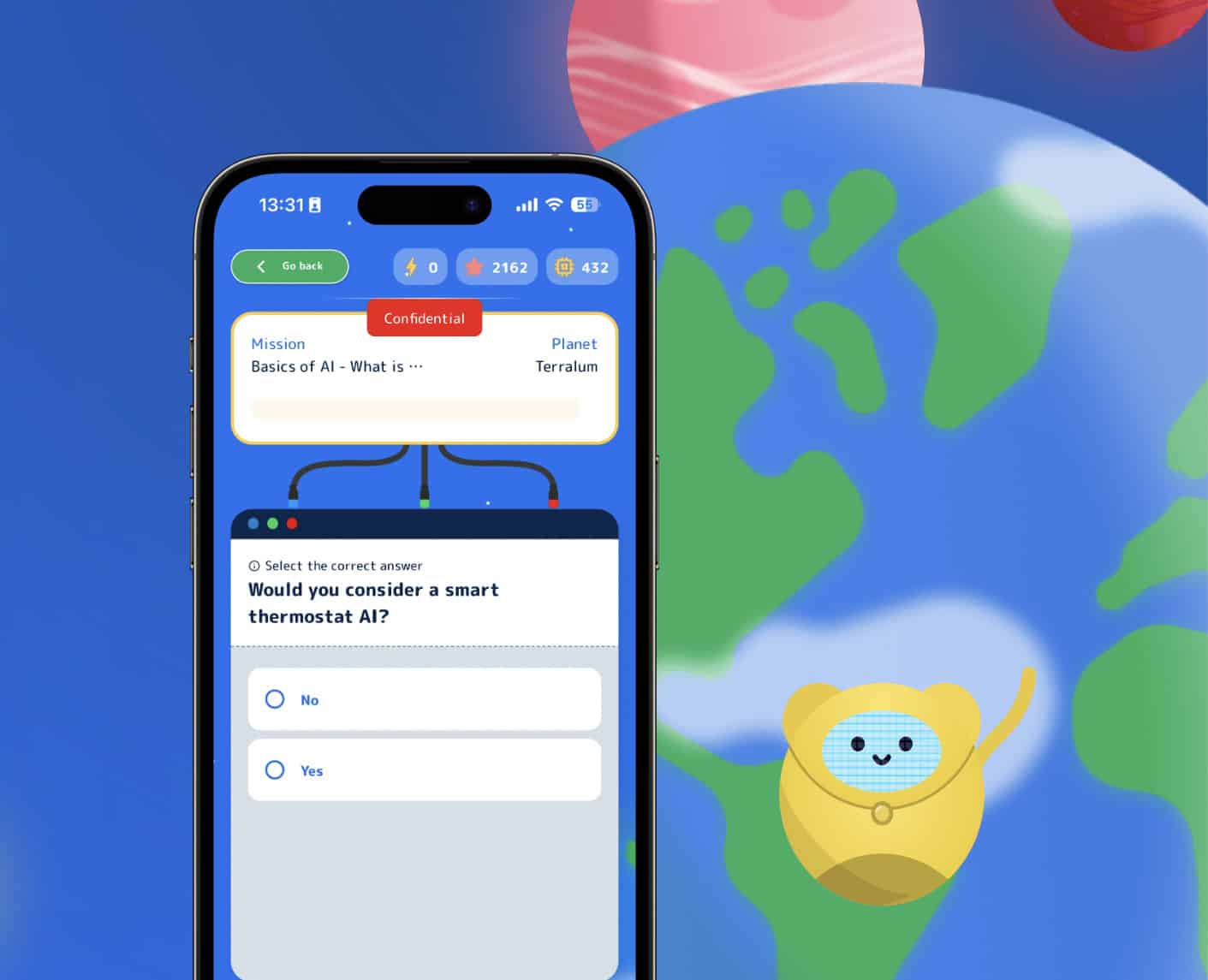

Artificial Intelligence (AI) is reshaping every aspect of our society, yet the education system lags in preparing students for this technological revolution. This article explores the transformative potential of AI literacy, detailing the unique multidisciplinary approach of AIKreate. Combining five foundational topics—ethics, mathematics, data science, coding, and AI engineering—AIKreate empowers students to become both users and creators of AI. Through partnerships with institutions such as the New England Innovation Academy (NEIA), AIKreate integrates technical expertise, ethical reasoning, and creative exploration into its programs, equipping students to navigate the complexities of AI innovation responsibly and effectively.
Empowering the Next Generation with AIKreate: A Multidisciplinary Approach to AI Literacy
Artificial intelligence (AI) is no longer confined to science fiction; it is a transformative force shaping industries, societies, and human interaction. Preparing students to navigate this landscape requires more than teaching them to use AI tools—it demands a holistic approach that combines technical knowledge, ethical reasoning, and creative problem-solving.
As a co-founder of AIKreate, I have dedicated my work to developing an educational model that moves beyond superficial engagement with AI. Instead of training students to be mere passengers on the AI airplane, we aim to make them pilots, capable of understanding its inner workings and steering it responsibly. This metaphor captures our commitment to empowering students as creators and ethical innovators, an ethos encapsulated in Richard Feynman’s words: “What I cannot create, I do not understand.”
Rethinking AI Literacy: A Multidisciplinary Approach
AI literacy is a uniquely multidisciplinary endeavor that requires expertise across diverse fields. AIKreate’s curriculum reflects this complexity by focusing on five core topics: ethics, mathematics, data science, coding, and AI engineering. Each AI model explored in our courses is contextualized with an additional focus: the subject of the data. This integration reinforces the interplay between technical design and its real-world applications, ensuring students grasp the broader implications of their work.
-
Ethics: Students draw ideas from frameworks such as consequentialism, deontology, and virtue ethics to examine issues like bias, privacy, and the societal impact of AI systems.
-
Mathematics: Foundational concepts such as statistics and optimization are introduced, demystifying the quantitative underpinnings of AI.
-
Data Science: Learners develop skills in data preprocessing, visualization, and interpretation, with a focus on identifying and mitigating biases in datasets.
-
Coding: Practical programming in languages like Python enables students to build, train, and evaluate AI models.
-
AI Engineering: From neural networks to reinforcement learning, students delve into the mechanisms that power intelligent systems, linking design choices to functional outcomes.
This multidisciplinary framework ensures that students gain technical proficiency and can situate AI within its broader societal and ethical contexts.
Mathematics as a Gateway to Understanding AI: A Transformative Educational Approach
Mathematics often poses a significant challenge in traditional educational settings. Studies highlight a persistent disengagement with the subject, driven by its perceived abstraction and lack of relevance to real-world applications (Boaler, 2016). AIKreate addresses this issue by situating mathematical concepts within the compelling context of AI projects, thereby transforming math from a static discipline into a dynamic and practical tool for exploration and creation.
In our curriculum, mathematics serves as a foundational pillar for understanding the inner workings of AI systems. Key topics such as statistics and optimization—concepts frequently regarded as intimidating or disconnected from everyday experiences—are considered essential components of AI innovation. For instance, students learn about parameter tuning and gradient descent through hands-on examples of neural network structures or apply statistics to train and evaluate predictive models.
This approach aligns with constructivist theories of education, such as those proposed by Piaget and Vygotsky, which emphasize learning through meaningful, contextualized experiences. By embedding mathematical learning within AI-driven problem-solving, students experience what Bransford et al. (1999) describe as “learning with understanding,” enabling them to transfer knowledge across disciplines.
Moreover, this methodology tackles a critical barrier in mathematics education: the lack of immediate, tangible outcomes. Through AIKreate’s project-based learning framework, students not only solve math problems but also witness the impact of their solutions in functional AI models. For example, optimizing the parameters of a machine learning model provides a clear, measurable outcome that connects mathematical computations to real-world applications.
The use of AI projects to teach mathematics also aligns with the interdisciplinary nature of modern education. AI inherently requires integrating technical, ethical, and domain-specific knowledge, offering a natural framework for students to see how mathematics interplays with coding, data science, and even social sciences. This multidisciplinary approach reinforces mathematical concepts and prepares students for the complexities of 21st-century challenges, where solutions often lie at the intersection of multiple fields.
AIKreate’s integration of mathematics within AI literacy demystifies abstract concepts and reignites student engagement with the subject. Giving mathematics a purpose and context transforms it into a gateway for innovation, empowering students to approach AI and mathematical problem-solving confidently and naturally.
A Fruitful Partnership: NEIA and AIKreate
Our collaboration with NEIA during the summer of 2024 represented a significant milestone for AIKreate. Students delved into AI concepts throughout the program while engaging in hands-on, creative applications. The experience culminated in a pitch competition where participants demonstrated innovative solutions, reflecting their technical understanding and ability to think critically and entrepreneurially.
The winning team, whose project used generative AI to address real-world challenges, stood out for its ingenuity and dedication. Since then, this group of young innovators has joined AIKreate as interns, further developing their skills while contributing to our initiatives. The success of this collaboration has inspired us to build on this experience with a new round of summer courses for 2025, expanding our reach and refining our curriculum to ensure students continue to benefit from this transformative partnership.
Course 1: AI and Entrepreneurship at Babson College and NEIA
This advanced program combines AI literacy with entrepreneurial education for high school juniors and seniors. Participants develop a deep understanding of AI concepts—such as generative models and algorithmic decision-making—while exploring their ethical and societal challenges.
The program’s unique feature is its integration of entrepreneurial frameworks, empowering students to design AI-driven solutions to global challenges. Mentorship from Babson College’s entrepreneurial leaders complements hands-on projects, fostering both technical skills and an entrepreneurial mindset.
Key Outcomes:
-
Proficiency in AI development and evaluation.
-
The ability to assess ethical implications in AI-driven innovations.
-
Entrepreneurial acumen to translate AI solutions into impactful initiatives.
Course 2: Future Makers: AI Skills for Middle School Students
This program, designed for younger learners (ages 12–15), introduces foundational AI concepts while fostering creativity and critical thinking. Students explore data science and programming through collaborative, project-based learning.
By designing imaginative AI solutions—like virtual assistants tailored to community needs—students develop technical skills and the ability to consider their work’s ethical and societal implications. This emphasis on critical engagement aligns with educational theories prioritizing active, experiential learning.
Key Outcomes:
-
Confidence in understanding and applying AI principles.
-
Strengthened teamwork and problem-solving skills.
-
Early exposure to ethical reasoning in technology development.
The Educational Imperative of AI Literacy
AI literacy is not just a technical competency; it is an essential life skill for navigating the complexities of the 21st century. AIKreate’s programs are rooted in active learning principles, allowing students to construct knowledge through experimentation, reflection, and problem-solving. Ethical reasoning is woven into every aspect of our curriculum, enabling students to evaluate AI technologies’ societal impact critically.
Moreover, including real-world data subjects in every project ensures students recognize AI’s multidisciplinary applications. This approach prepares them to bridge gaps between technology and other fields, fostering collaboration among technologists, ethicists, and domain experts.
How Will We Evaluate Student Success?
Evaluating students’ success in AIKreate programs requires a multifaceted approach that reflects technical proficiency and holistic growth. Key evaluation methods include:
-
Project-Based Assessments: Students complete AI-driven projects where their ability to design, build, and optimize models is assessed alongside their critical thinking and creativity.
-
Ethical Reasoning: Activities like analyzing bias in datasets and evaluating the societal implications of AI applications allow us to gauge students’ understanding of AI’s broader impact.
-
Mathematical Application: Success can also be measured by the practical application of mathematical concepts such as probability and linear algebra in real-world AI contexts, which demonstrates the ability to link theory with practice.
-
Collaboration and Communication: Students are evaluated on their teamwork and ability to articulate complex ideas during collaborative activities and pitch presentations.
-
Longitudinal Feedback: Post-program surveys and mentorship follow-ups help us assess how students apply their AI knowledge in academic, entrepreneurial, or real-world settings beyond the classroom.
Shaping Future Innovators and Ethical Leaders
Students who complete AIKreate’s programs emerge with a rare combination of skills: technical proficiency, critical thinking, and ethical awareness. They are prepared to understand and create AI and shape it in ways that reflect diverse perspectives and societal values. AIKreate equips learners to lead in an AI-driven world by integrating technical rigor with ethical engagement and making informed decisions that balance innovation with responsibility.
As Feynman reminds us, proper understanding requires creation. Through AIKreate, we ensure students can create solutions using AI thoughtfully and purposefully by navigating its complexities.
Conclusion
In an era defined by AI’s transformative potential, education must rise to meet the challenge by preparing students with the skills needed to navigate a rapidly evolving world. At AIKreate, we integrate ethics, mathematics, data science, coding, and AI engineering into a cohesive curriculum that empowers students to use AI tools and to understand, create, and lead with them responsibly. Our partnership with NEIA exemplifies how collaborative efforts can enhance this mission, creating a robust learning environment where students transition from passengers to pilots of the AI airplane—capable of shaping its trajectory with knowledge and ethical insight.
Equally important, AIKreate emphasizes developing essential 21st-century skills, particularly imagination, creativity, and critical thinking, alongside other soft skills like teamwork, communication, and adaptability. Education research has consistently shown that these competencies are foundational for success in both professional and personal contexts. Soft skills enable students to tackle complex, ill-defined problems—a hallmark of the AI-driven world—by fostering resilience, emotional intelligence, and the ability to work across disciplines. For instance, imagination and creativity fuel the ability to envision innovative applications for AI, while critical thinking ensures these applications are grounded in ethical considerations and sound reasoning.
AIKreate addresses these skills through a multidisciplinary, project-based learning approach. Students engage in real-world challenges that require collaboration, ideation, and iteration. For example, in our pitch competitions, teams must design AI solutions and present them persuasively, combining technical expertise with storytelling and strategic communication. These experiences mirror AI innovation’s collaborative and dynamic nature in the real world, helping students build confidence and adaptability.
Moreover, by intertwining technical disciplines with ethical reflection, we encourage students to think critically about the broader implications of their work. This dual perspective—technical and humanistic—ensures that students are adept problem-solvers and conscientious leaders capable of navigating the ethical complexities of AI deployment.
In fostering these soft skills, AIKreate prepares students for the challenges and opportunities of the 21st century. Our students leave with more than technical knowledge; they are equipped with the creativity to innovate, the critical thinking to solve meaningful problems, and the ethical grounding to lead responsibly. These attributes, combined with their deep understanding of AI, position them to shape the future of technology and society with purpose and vision.
About the author
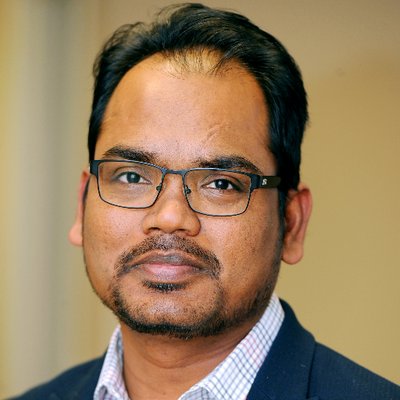
Marc Oliveras is a trailblazing AI educator and co-founder of AIKreate. With over 20 years of experience in education, he spearheaded innovative initiatives in AI learning well before the rise of generative AI tools like ChatGPT. In 2016, he began dedicating himself to fostering AI literacy among teens, fueled by his passion for empowering young minds to shape the future of technology.
Marc holds a Ph.D. in Management Sciences, an MBA, and an MSc in Big Data & Business Analytics. He currently serves as Chair of the Board of Trustees at L’Horitzo School in Barcelona, where he continues to advocate for innovative learning approaches.